Using Motion Capture to Teach an Acting Course

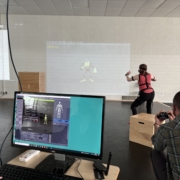
In a collaboration between the College of Arts and Letters and an acting course on Michigan State’s campus, I worked to help students learn how to capture the essence of a character when in a motion capture suit. This was a very exciting and educational experience for both the dancers and my team, as working with the capabilities of the motion capture suits forced the tech team to work alongside the actors to create fluid movements and fitting atmospheres. In the next coming weeks, we plan to work with the actors to “act against themselves”, prerecording themselves as a creature to later insert into a scene using Augmented Reality programming so they can act with themselves.
Virtual Reality Frog

Exploring Motion Capture Software

After meeting with a team of dancers looking to explore different methods of learning choreography, our team decided to step in with our motion capture software. In an exploratory effort, we used AXIS motion suits to capture the dancer’s movements and mapped those recording in Character Creator. We then used Adobe Aero’s beta desktop software to map dancers in augmented reality. This gave dancers trying to learn steps a 3-D rendering of the moves they needed to know, making it easier for them to learn complex moves that don’t translate as well in a 2-D video.

From here, we began to explore working with theater students to explore the world of virtual reality and it’s potential in teaching acting techniques. This process is still ongoing and work is set to be released to the public in early May regarding final footage.

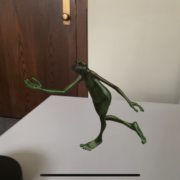
Featured below is an early test of the motion software, modeled and mapped by myself.

ALC Conference Presentation

Accessible Learning Conference Keynote Speaker

Faced with an accessibility flag, a professor reached out to the accessibility team in which I worked. Reviewing her course, we identified crucial pain points to her teachings and access to resources when it came to designing her course. Realizing an important conversation about accessibility and learning goals presented itself, we formed a small team to talk at the Accessibility Learning Conference as a keynote speaker. This was an important project, as many crucial conversations occurred when forming this team to make it feel like a safe space for those involved to have a deep conversation about topics that are oftentimes left unmentioned. Our talks explored what a graphic design class would look like for the visually impaired, focusing on the intended meaning of content on learning platforms and how to communicate that to students.

Brittnay Speaking to Youth

Inspiring Young Women to Explore a Career in Tech

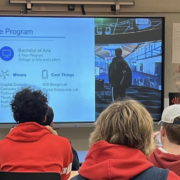
For the second year, I visited a local high school graphic design program to speak to future college students about my career and experiences in the world of tech. In this program, I explored the options available for students in the academic space and the early job market. Putting a specific focus on young woman looking to enter the space, I approached students with resources and groups that will help them develop a sense of community with other women pursuing similar careers.